Two Bottles, One Shelf: Telling Hemp Seed Oil and CBD Extract Apart in the UK
Photo: James St. John, CC BY 2.0, via Wikimedia Commons
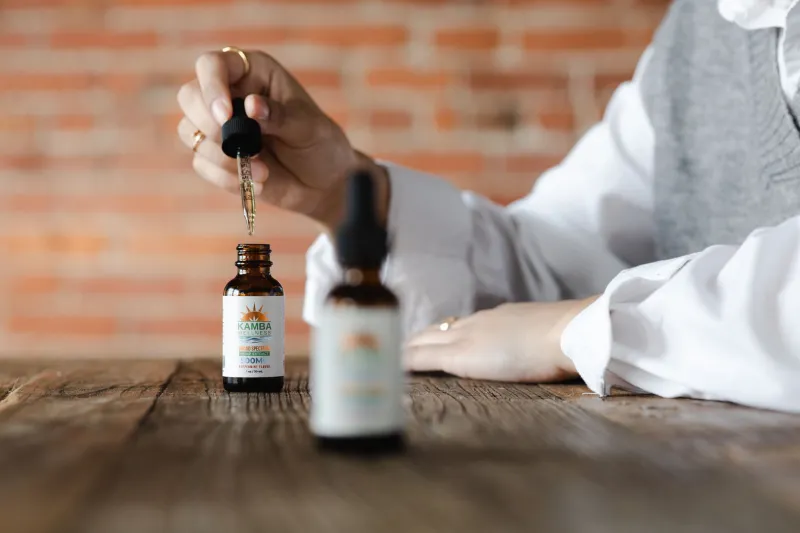
Walk down the right aisle of a British health food shop and you'll spot them within seconds: two dark glass bottles, both green-and-white labelled, both shouting about hemp. One costs £11. The other costs £69. Nothing on the front of either bottle explains why.
This is one of the most common points of confusion in the whole UK hemp category, and it isn't an accident. "Hemp oil" is a loose phrase. It can legitimately mean the cold-pressed seed oil you'd drizzle on a salad, or it can be used — rather more loosely — to describe a cannabinoid extract. Same words, entirely different products.
So let's separate them properly.
One comes from seeds, the other from flowers
Hemp seed oil is pressed from the seeds of the plant. That's it. Think of it the way you'd think of rapeseed or sunflower oil: a culinary fat with a nutty, slightly grassy flavour, a deep green tint, and a decent amount of omega-3 and omega-6 fatty acids. It contains essentially no cannabinoids — no CBD, no THC worth mentioning. You'll find it in the cooking oil section, and increasingly in the skincare aisle under the INCI name Cannabis Sativa Seed Oil.
CBD oil is made from the flowers and leaves. The plant material is extracted, the resulting oil is refined, and cannabinoids are either left in (full spectrum), partly removed (broad spectrum) or isolated down to a single compound. That's the product people mean when they talk about dropper bottles, milligrams per ml, and FSA daily intake advice.
Different raw material, different process, different cost base. A field of hemp produces far more seed by weight than it does extractable flower, which is a large part of why one bottle is a tenner and the other isn't.
The label clues that actually mean something
Forget the front of the pack for a moment. Turn it around.
Ingredients list. Hemp seed oil should have one ingredient: cold-pressed hemp seed oil. Possibly with vitamin E as an antioxidant. That's a food product and a straightforward one. A CBD product will list hemp extract, a carrier oil (often MCT or olive), and then — crucially — a milligram figure per bottle or per ml.
The numbers. Cannabinoid products sold in the UK should state total CBD content clearly, and reputable brands publish a batch-specific lab certificate you can look up. If there's no number, or the number only appears in marketing copy rather than on the label, treat that as information in itself.
Recommended use. Seed oil says something like "1 tablespoon, in dressings or smoothies". CBD extract says "place 2–3 drops under the tongue" with a daily maximum. If the label is vague about how much to take, it's usually vague for a reason.
Novel food status. CBD extract sold as a food or supplement in the UK sits within the FSA's novel foods framework, and only products on the public register can legally be sold. Hemp seed oil predates all of this and is simply a traditional food. If a bottle is making supplement-style claims but you can't find it on the register, that's worth a second thought.
Four questions to ask before you pay
- "Is this seed oil or extract?" Ask it out loud if you're in a shop. A good retailer will answer instantly and without flannel. A hesitant answer tells you plenty.
- "How many milligrams of CBD are in the whole bottle?" Not per drop, not "high strength" — the total. Then divide by the number of servings to see what you're actually paying per dose.
- "Can I see the lab report?" Batch-level, dated, with cannabinoid content and a THC figure. This is normal practice now and any brand worth its salt will have it on the website.
- "What's the THC content?" UK guidance for cannabinoid products expects THC at or below 1mg per container. It's a small detail that separates the careful operators from the chancers.
Where each one belongs
If you want something to cook with, dress a salad with, or blend into a morning smoothie, you want seed oil. It's cheap, it's food, and it has a genuinely nice flavour — though keep it away from a hot pan, because it doesn't like high heat.
If you're curious about CBD specifically, buy a cannabinoid product, and buy a small one first. The FSA advises healthy adults not to exceed 10mg of CBD a day, and specifically recommends that people who are pregnant, breastfeeding, on medication or under 18 don't take it at all. Starting with a 5% bottle rather than a 20% one costs less and tells you more.
What you shouldn't do is buy seed oil expecting CBD effects, or pay extract prices for a cooking ingredient with a hemp leaf on the front. It happens more often than you'd think — usually because the packaging was designed to make it happen.
A quick mental checklist
Seed oil: food aisle, one ingredient, nutty taste, green colour, cheap, no milligram figure, no dropper.
Extract: supplement shelf, carrier oil plus hemp extract, milligram figure on the label, lab report online, dropper, considerably more expensive.
Two bottles, two jobs. Once you know which is which, the shelf stops being confusing — and the pricing starts making a lot more sense.
Nothing here is medical advice. If you're taking medication or managing a health condition, have a word with your pharmacist or GP before adding anything new.