Lights Out, Label Straight: What CBD Can and Can't Do for a British Night's Sleep

Photo: Michael Gaylard from Horsham, UK, CC BY 4.0, via Wikimedia Commons
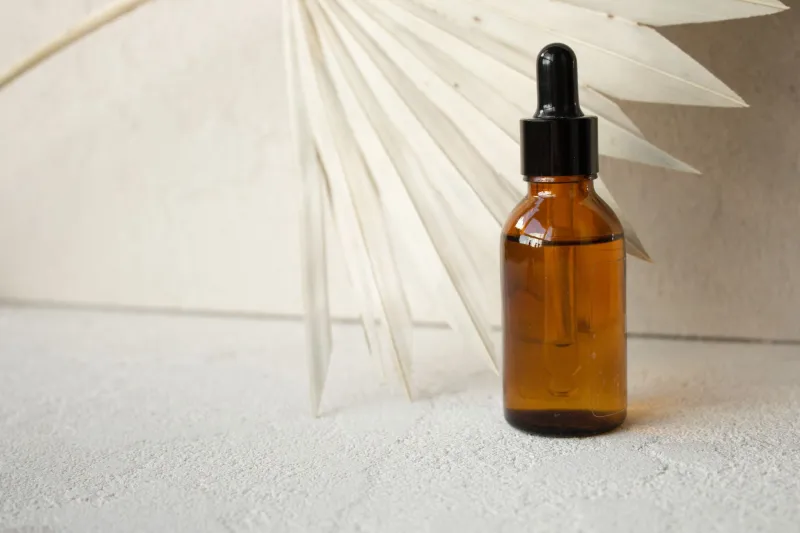
There is a particular moment, somewhere around ten past eleven on a Tuesday, when a lot of British bedrooms look exactly the same. Phone face down on the bedside table. Half a glass of water. A small amber bottle that cost more than a decent takeaway. And a person lying very still, waiting for their brain to stop replaying a work email from 2019.
CBD has slid into that moment quietly, without anyone formally inviting it in. It sits next to the lavender pillow spray and the eye mask now. So let's talk about it properly — no miracle claims, no doom, just what the stuff is, what the label is telling you, and where the real work of winding down actually happens.
The legal bit nobody puts on the bottle
Here's the honest starting point: in the UK, CBD is not an authorised medicine for sleep. You will not find it on a prescription for insomnia, and any brand promising to 'cure' your sleeplessness is writing cheques that the evidence cannot cash.
CBD is sold as a food supplement, which is why it has to sit on the Food Standards Agency's novel food register — that's the list of products that have submitted the paperwork to be legally sold. If a bottle isn't on it, that's not a quirky indie detail. That's a reason to put it back on the shelf.
The research picture is genuinely mixed. Some studies suggest CBD may help people feel calmer; others show very little. What the science does not support is the idea of a guaranteed eight hours. Anyone selling you certainty is selling you something else.
Reading the label while you're still dressed
The single worst place to make a CBD decision is in bed, at midnight, squinting at a bottle you've already bought. Do the checking in daylight, at the kitchen table, with a cup of tea.
A few things worth looking at:
- Milligrams per bottle versus milligrams per dose. A 30ml bottle with 1,500mg sounds enormous until you work out that a 0.5ml dropper holds 25mg. Do the division before you decide it's 'strong'.
- The serving suggestion on the back, not the marketing on the front. Front labels are poetry. Back labels are facts.
- A batch number and a lab report. A brand that can show you a certificate of analysis for the exact batch you're holding is a brand that knows what's in its own product.
- THC content. UK products should be effectively THC-free. If the label is vague about it, treat that as a small red flag rather than a charming mystery.
- Whether it's full spectrum, broad spectrum or isolate. These behave differently and cost differently. If the bottle doesn't say, it's probably the cheapest of the three.
None of this guarantees a better night. It just means you know what you're taking, which is the bare minimum for anything going in your mouth at bedtime.
Timing is half the experiment
People tend to expect CBD to work like a light switch. It doesn't. If you're trying it as part of a wind-down, the sensible approach is to treat it like a routine rather than a rescue remedy.
Most people who use it in the evening take it somewhere between thirty and ninety minutes before bed — early enough to be part of the wind-down, late enough that you haven't forgotten about it by the time you've brushed your teeth. Keep the dose steady for a couple of weeks rather than fiddling with it nightly, because chopping and changing tells you nothing.
And keep a note. Not a spreadsheet with graphs — just a line in your phone. What you took, when, how you slept, how you felt the next morning. Two weeks of that is worth more than a hundred reviews from strangers.
The parts of the routine that do the heavy lifting
Here's the unglamorous truth: the dropper is a supporting act. The headline is everything else in the hour before bed.
A few things that cost nothing and consistently help:
- A consistent wake-up time, even at weekends. The body likes a schedule more than it likes a lie-in.
- Dimming the lights properly. Big light off, lamps on. It's a small ritual and it works better than most bottles.
- Getting the phone out of the bedroom or at least off the pillow. The doom-scroll is a far more reliable sleep disruptor than CBD is a sleep aid.
- Cooling the room down. British bedrooms tend to be either Baltic or stuffy, and neither is restful.
- Parking the worry. A notebook by the bed for the 11pm thought spiral — write it down, deal with it at breakfast.
If you're taking CBD but still drinking a strong coffee at 6pm and scrolling until midnight, you haven't really tested it. You've tested nothing.
What a realistic first month looks like
Set your expectations somewhere near the floor and you'll be pleasantly surprised rather than quietly disappointed.
It's reasonable to hope for a slightly easier wind-down — a bit more settled going into bed. It's not reasonable to expect CBD to fix a sleep problem that's been building for three years, or to override a stressful job, a new baby, or a bedroom that's also an office.
If after four to six weeks of consistent use and decent sleep habits you notice no difference at all, that's useful information. It probably isn't for you. Stop, save the money, and put it towards something that actually helps.
When the GP should be on your list
CBD is a supplement, not a substitute for care. If you've been sleeping badly for more than a few weeks, if it's affecting your mood, your work or your driving, or if you're taking prescribed medication — antidepressants, blood thinners, epilepsy drugs, anything with a warning label — then a conversation with your GP comes before another bottle, not after.
Be straightforward with them about what you're taking. GPs aren't there to judge the contents of your bedside drawer; they're there to make sure nothing interacts badly and to point you towards things that genuinely work, including talking therapies for insomnia that are available through the NHS.
A short pillow-side checklist
Before the lights go off tonight, run through this: is the product on the FSA register, do you know your dose in milligrams, has it been the same dose for a fortnight, and is the rest of your evening actually wind-down shaped — or is it just a normal evening with a dropper bolted on?
CBD might earn its place on your bedside table. It might not. Either way, you should be the one deciding, with a straight label in front of you and a realistic idea of what you're asking it to do. That's a far better route to a decent night than hope in a bottle.