The Free Taster Trap: A Calm Checklist for CBD Sample Stalls and Market Stands
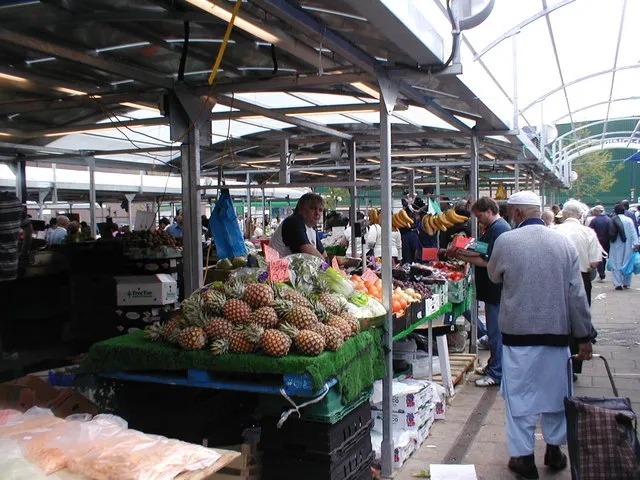
Photo: Row17, CC BY-SA 2.0, via Wikimedia Commons
There's a particular kind of British discomfort that arrives when a stranger holds out a small pipette and says 'go on, try it, it's free'. You don't want to be rude. You also don't want to swallow an unidentified liquid from a folding table in a shopping centre. Both instincts are correct.
CBD sample stalls have multiplied at UK markets, county shows, wellness fairs and pop-ups, and most of the people running them are perfectly pleasant. But a taster is a sales technique before it's anything else, and the ten seconds before you open your mouth are the most useful ten seconds in the whole transaction. Here's what I'd want to know, in the order I'd want to know it.
First, the honest bit about free samples
A sample costs the seller pennies and buys them your attention, your email address, or your card details. That's not sinister, it's retail. But it does mean the sample is not a neutral act of generosity, and you're allowed to treat it as the start of a shopping conversation rather than the end of one.
Also worth saying plainly: a free taster gives you no way to judge whether CBD does anything for you. One drop on a Saturday tells you what it tastes like and nothing more. Anyone suggesting otherwise at a stall is overselling.
Three questions before you take the pipette
- What's in it besides CBD? Carrier oil, flavour, sweetener, anything else. If they can't tell you the base oil, that's your answer.
- How much am I actually taking? Milligrams per drop or per millilitre, not 'a serving'. A dropper is not a standard unit, whatever the stallholder implies.
- Is this the same batch you're selling? If the taster bottle is unlabelled and the retail bottles are sealed and printed, you're sampling something you can't trace. Ask them to show you a retail bottle and compare.
If any of those three produce a shrug, thank them and move on. You've lost nothing.
Batch numbers and lab reports, on the spot
This is the bit that separates a proper stall from a hopeful one. A real CBD seller should be able to point at a batch number printed on the bottle — not a sticker added while you watched — and match it to a laboratory certificate, often called a COA. Many will have it on a phone, or a QR code on the packaging that opens a lab report.
What you're checking is simple: does the batch code on the bottle match the batch code on the certificate? If the answer is 'the lab tested our best batch', that's not a match. If the certificate is for a different product, that's not a match either. And if there's no batch number at all, you're being asked to trust a folding table.
Worth knowing too: in the UK, CBD sold as a food product is expected to be on the Food Standards Agency's novel foods register, which means a named business, a defined product and a paper trail. It is entirely reasonable to ask which business is behind the stall and whether the product is on that list. Good sellers will know. The ones who get defensive have told you something useful.
Hygiene, because nobody mentions it
Drops go in your mouth. If the stall is offering a communal pipette that's been in and out of a shared bottle all afternoon, decline politely. Single-use pipettes, disposable spoons, or a sealed sample sachet are the only versions I'd accept. It's not fussy; it's a market.
The pressure moves and how to sidestep them
The 'just take my card details for the discount' move. The 'special price today only' move. The 'everyone's buying the 3000mg' move. The friendly arm-touch and the story about a cousin's bad back.
All of it lands better if you've decided your exit line before you arrive. Mine is: 'Thanks, I'm just browsing today, I'll look at the label and come back if I want to.' It's true, it's polite, and it ends the conversation without a debate. You don't owe anyone your medical history, your budget, or an explanation of why you're not convinced.
And if a seller starts making claims about treating conditions, that's your cue to leave rather than argue. In the UK, CBD isn't licensed as a medicine, and a stall claiming otherwise is either misinformed or breaking the rules. Neither is your problem to fix on a Saturday.
Two things to sort out before you sample
If you're on prescription medication, pregnant, breastfeeding, or looking after children for the rest of the afternoon, skip the free drop and ask your pharmacist or GP first. CBD can interact with some medicines, and a market stall is not the place to work that out.
If you're driving home, also skip it. CBD isn't intoxicating, but if you're later asked to provide a specimen, you want a boring answer, not a complicated one.
A pocket checklist
- Batch number on the bottle, matching a lab certificate
- Milligrams per ml, stated clearly
- Carrier oil named
- Business behind the stall identifiable
- Single-use pipette or sealed sample
- No medical claims, no hard sell
- Price per milligram, worked out before you commit
That last one is the quiet killer of impulse buys. Divide the price by the total milligrams and compare it to what you'd pay online. Stalls can be excellent value or terrible value, and the only way to know is arithmetic.
Leaving without the lecture
You can take a taster, ask three questions, decide the packaging is lovely and the maths isn't, and walk away with a smile. That's not awkward. That's shopping. The stallholder will have another punter along in ninety seconds, and you'll have kept your money, your standards and your afternoon.